One Person, Open Source, and AI: My Software Factory
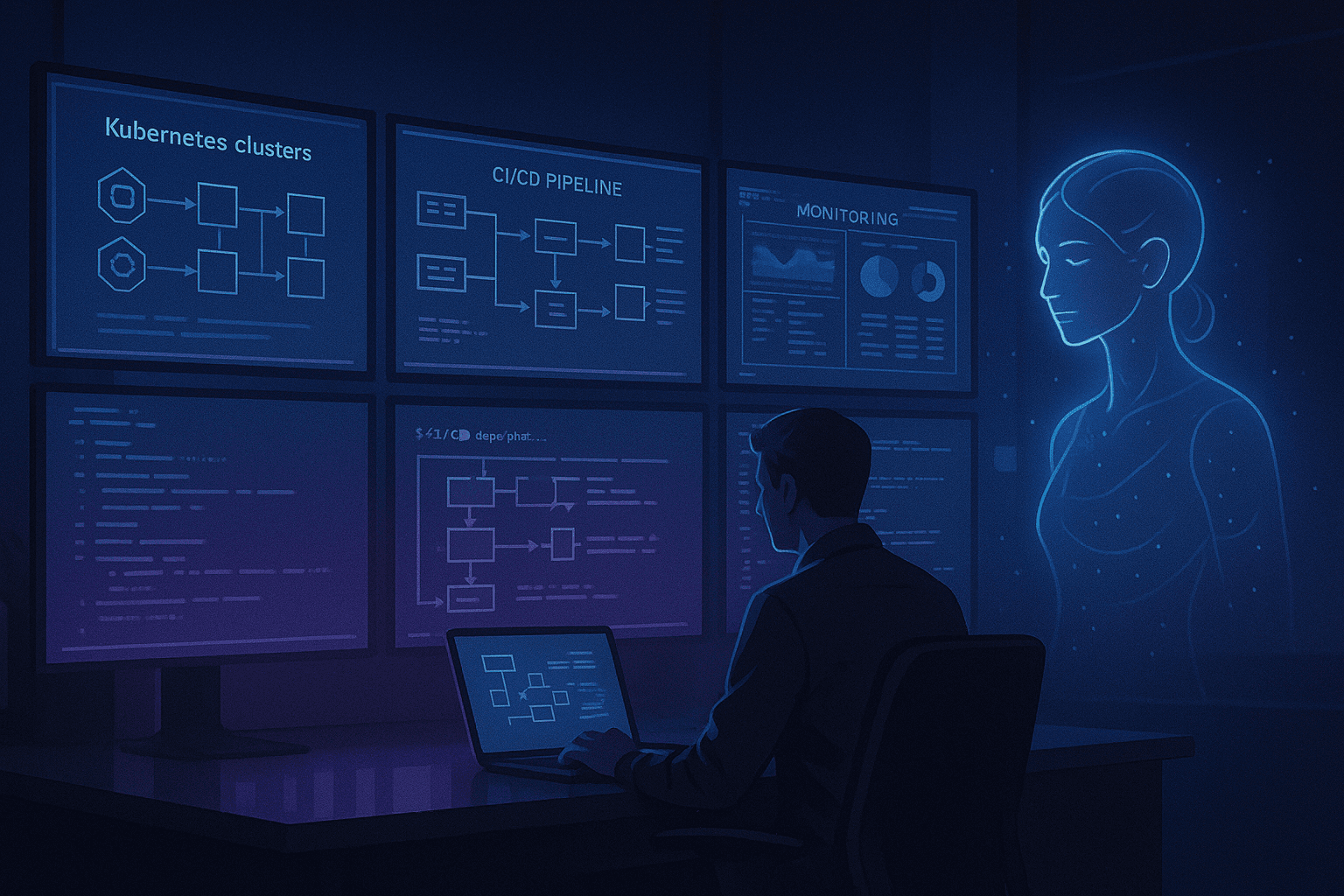
Most people start by building an app. I decided to start by building the factory behind every future app.
As I'm building a one-person AI software company, I realized early that the real bottleneck isn't coding — it's everything around it: deployment, monitoring, secrets, pipelines, backups, logs, DNS, environments, upgrades, and keeping 10–20 small services alive at the same time.
If you want to build many products in parallel, you can't rely on manual steps. You need infrastructure that scales with you.
So I built my own platform
Not a giant enterprise setup, but a full open-source stack I control end-to-end: Kubernetes clusters, CI/CD, secrets management, observability, ChatOps, registries, and automated scaffolding for new projects. Everything glued together into a consistent pipeline.
And here's the honest part: It wasn't easy.
There's a huge difference between theory and reality:
- On paper, the pipeline is 100% automated.
- In practice, different tools behave differently.
- Some apps need special handling.
- Some integrations just don't play nicely.
- Automation breaks if you don't design for edge cases.
I've spent a lot of time experimenting, rebuilding, refactoring, standardizing, and fixing things that "should work" but don't. There's a mental load in deciding how much to automate — because too much automation becomes its own complexity trap.
But here's the payoff
Even if it's not perfect, even if every step isn't magic… I have reduced the manual work dramatically.
- What used to require hours of hand-holding now takes minutes.
- What used to be 20 ad-hoc steps is now 2–3 consistent actions.
- Most importantly: I can safely run many small products in parallel.
AI didn't do this for me. But it multiplied my ability to do it.
AI has been my:
- architectural sparring partner
- configuration generator
- debugging assistant
- documentation writer
- problem-explainer
- "sanity checker" when integrating complex tools
It doesn't replace thinking — but it amplifies it. And it lets one person do what normally requires several specialized roles (DevOps, platform engineering, SRE, backend, infra, CI/CD).
The result?
I now have:
- short path from idea → deployed service
- very low marginal cost for each new product
- an infrastructure foundation that grows with me
- the ability to experiment aggressively
- a system where I can ship, monitor, and update multiple AI-driven apps simultaneously
My biggest reflection
Building an "internal platform" is not something only big companies can do anymore. With open source + AI as leverage, a single person can design and operate a full modern delivery pipeline.
We are entering a new era of software creation — where the combination of one person + open source + AI can replace what used to be entire teams.
So here's my question to the community
What happens when more people start building factories instead of just products?
I'm very curious to find out — and this is only the beginning.
Originally published on LinkedIn